Bob Mitchum's Music Career: A Humble Homage to Calypso and Country
How the only Hollywood tough guy who couldn't give a fuck about his brand released a calypso album and a country album, and somehow made both of them work.
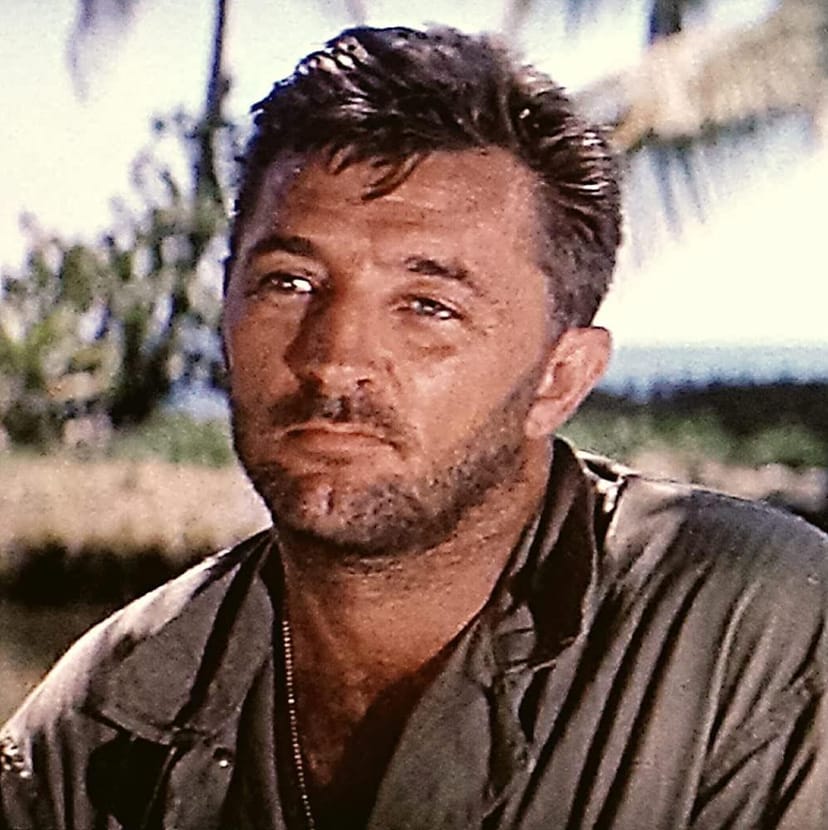
Old Hollywood movie fans have come to expect that their idols are often not who they say they are. Poverty-stricken Archie Leach from Bristol, England, transformed himself into distinguished man of the world Cary Grant, while lowly prop boy Marion Morrison morphed into cowboy superstar John Wayne.
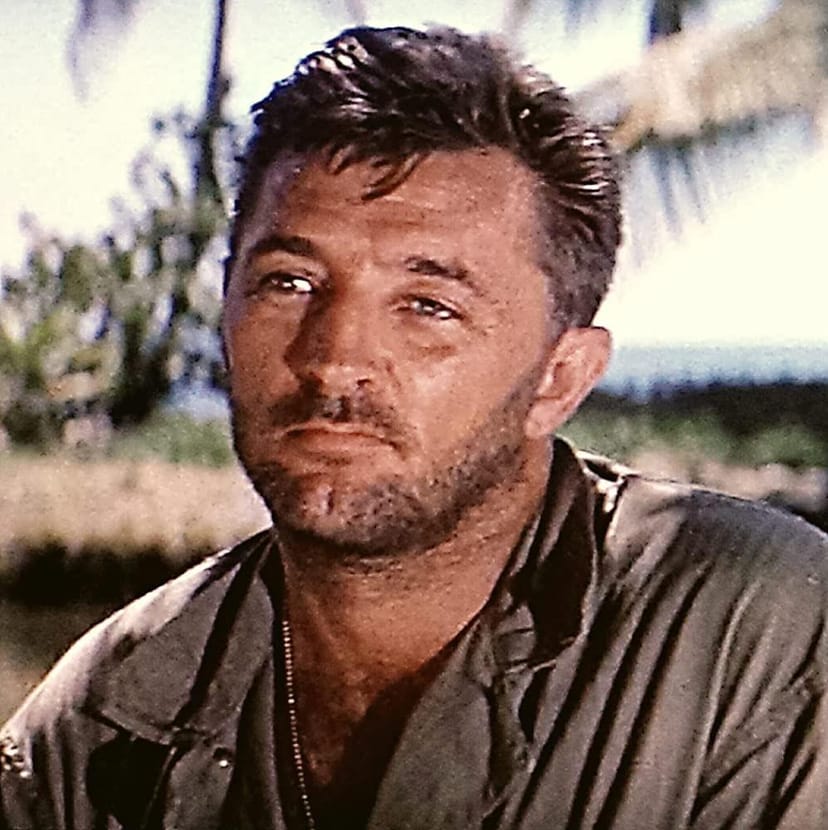
But one male Hollywood star managed to "keep it real" for his entire career; step forward brooding, charismatic chancer Robert Mitchum, the pot-smoking, couldn't-give-a-fuck leading man who lit up the big screen for more than 50 years in classic films such as Out of the Past, Heaven Knows, Mr. Allison, and The Night of the Hunter.
In the mid-1990s, Mitchum recalled a conversation he had with old friend Humphrey Bogart, who said "you know, the difference between you and me and those other guys is? We're funny." And Bogey was bang on. Mitchum is hilarious. He never took himself or the work too seriously, and he had a damn good time in the process.
One of my favourite fun facts about Mitch is that, alongside a hugely successful movie career (he came 23rd in the American Film Institute's list of the 50 greatest American screen legends of all time, although how he didn't make the top 10 is beyond me), he also released two music albums that are surprisingly entertaining.
"You know, the difference between you and me and those other guys is? We're funny. — Humphrey Bogart to Robert Mitchum
The folk album that sank without trace
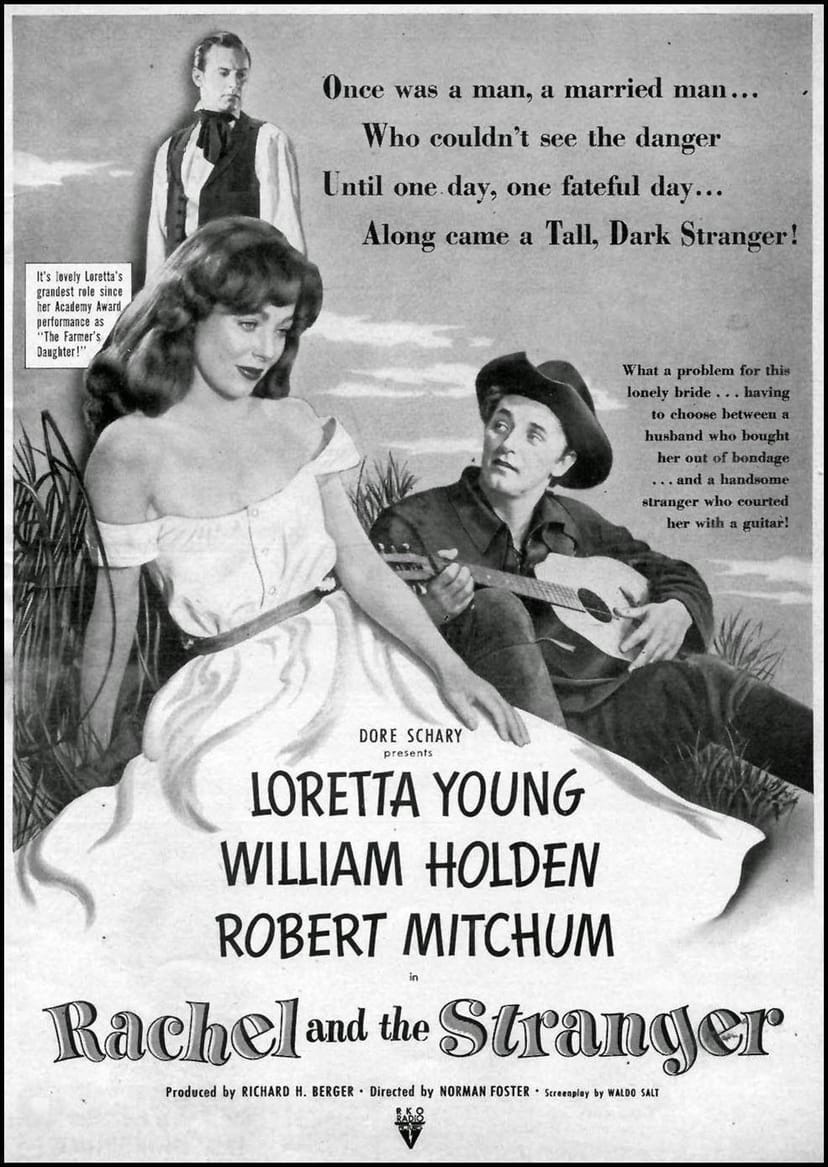
In 1948's love triangle drama Rachel and the Stranger, starring Loretta Young and William Holden, Mitchum was asked to sing six original folk tunes that had been composed specifically for him. As a way of publicising the film, Mitchum was signed to Decca Records and produced an album of the songs he sings in the movie. At this point, folk music was very much on the periphery of popular music and wasn't a widely recognised genre.
Mitchum loved music and listened to a wide variety of styles, from classical to jazz, from country to calypso. He was known to have a huge record collection and often disappeared for hours to listen to his records and smoke piles of marijuana. Friends and family recalled his generosity when it came to his singing voice; he did not require any persuasion to get up and sing at parties.
The folk album sank without trace, and despite an attempt by Columbia Records to sign him (thwarted by his boss, Howard Hughes), he didn't record another album for 10 years. Capitol got wind of his musical talents and tried to make something happen, but it wasn't until they got some inspiration, in the form of the next big musical fad, that Mitchum got to record his second album.
Calypso in Trinidad
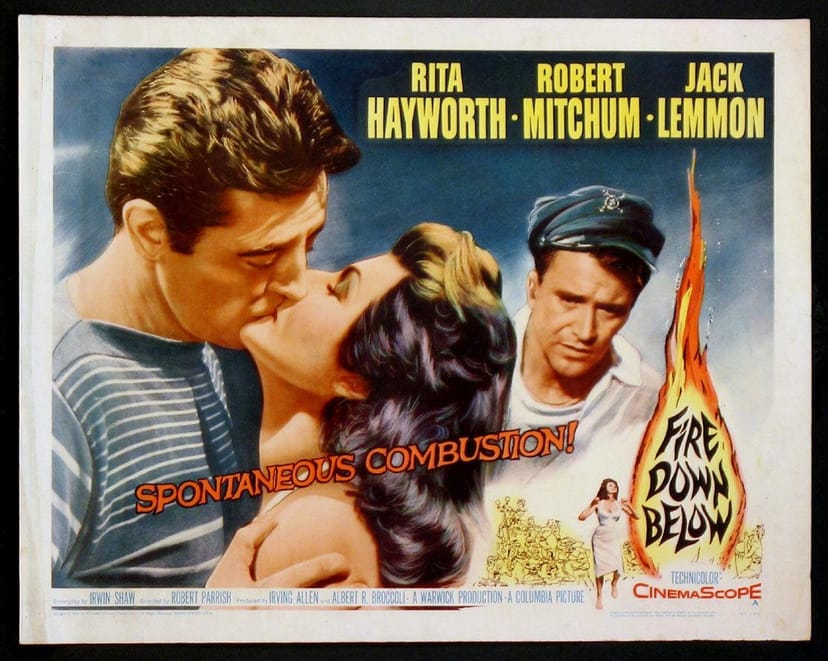
During the filming of Fire Down Below, filmed in Trinidad and Tobago with Jack Lemmon and Rita Hayworth, Mitchum embraced the Afro-Caribbean music scene and was regularly seen hanging out with local musicians and singing in their distinctive style. Locals complimented him on the natural inflections in his voice and his ability to mimic the sounds of local calypso.
Back in Hollywood, Mitchum shared his passion for the music he had grown to adore on the islands with Johnny Mercer, the founder of Capitol Records, who had been trying to get Mitchum into the studio for some time. Harry Belafonte's Calypso album had been a huge hit the year before (it held the number one spot for 31 weeks and was the first LP to sell a million copies).
Calypso — Is Like So...
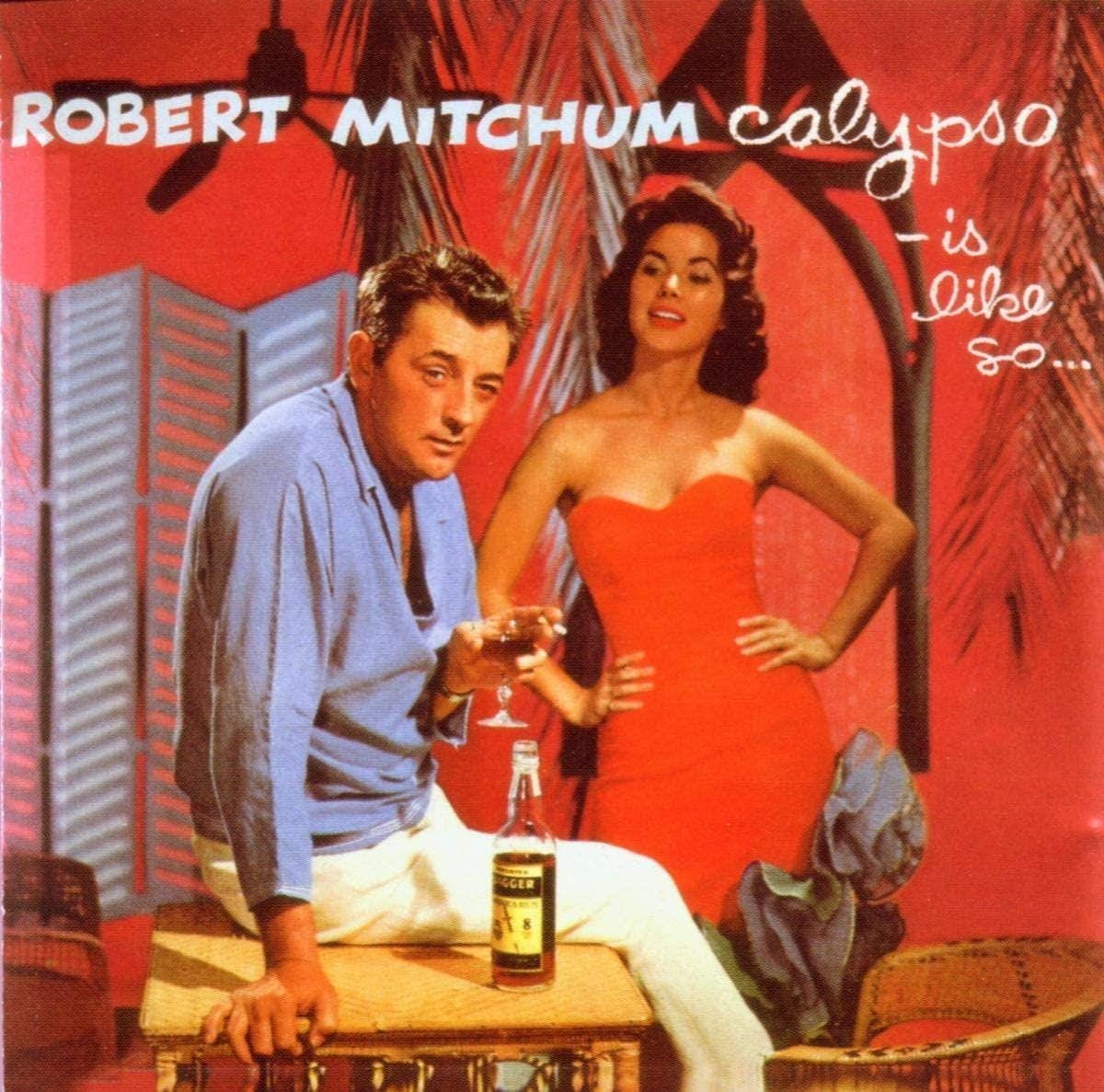
Mitchum went back into the recording studio to record one of the most surreal Hollywood/music crossovers of all time. The resulting album, released in 1957, was called Calypso — Is Like So... The front cover is a striking image of Mitchum in a Technicolor beach bar, drinking Jamaican rum with a dusky beauty by his side.
I love this album. It's fascinating that a huge Hollywood star like Mitchum was able to release a calypso record. At the time, Mitchum was praised for his authentic Caribbean accent, which isn't terrible, but it's surreal listening to the album today, knowing that this is a white guy singing Black folk and calypso songs.
"Jean and Dinah" and "Coconut Water" are really catchy tunes that were quickly added to my holiday playlist. Mitchum also offers love lessons in "From a Logical Point of View," singing "if you want to be happy, living a king's life, never make a pretty woman your wife." And he pontificates on the state of the youth of the day in "What Is This Generation Coming To?" as he warbles "all the parents say their children will grow up delinquents" because they're listening to Elvis Presley and Harry Belafonte.
A swerve into country
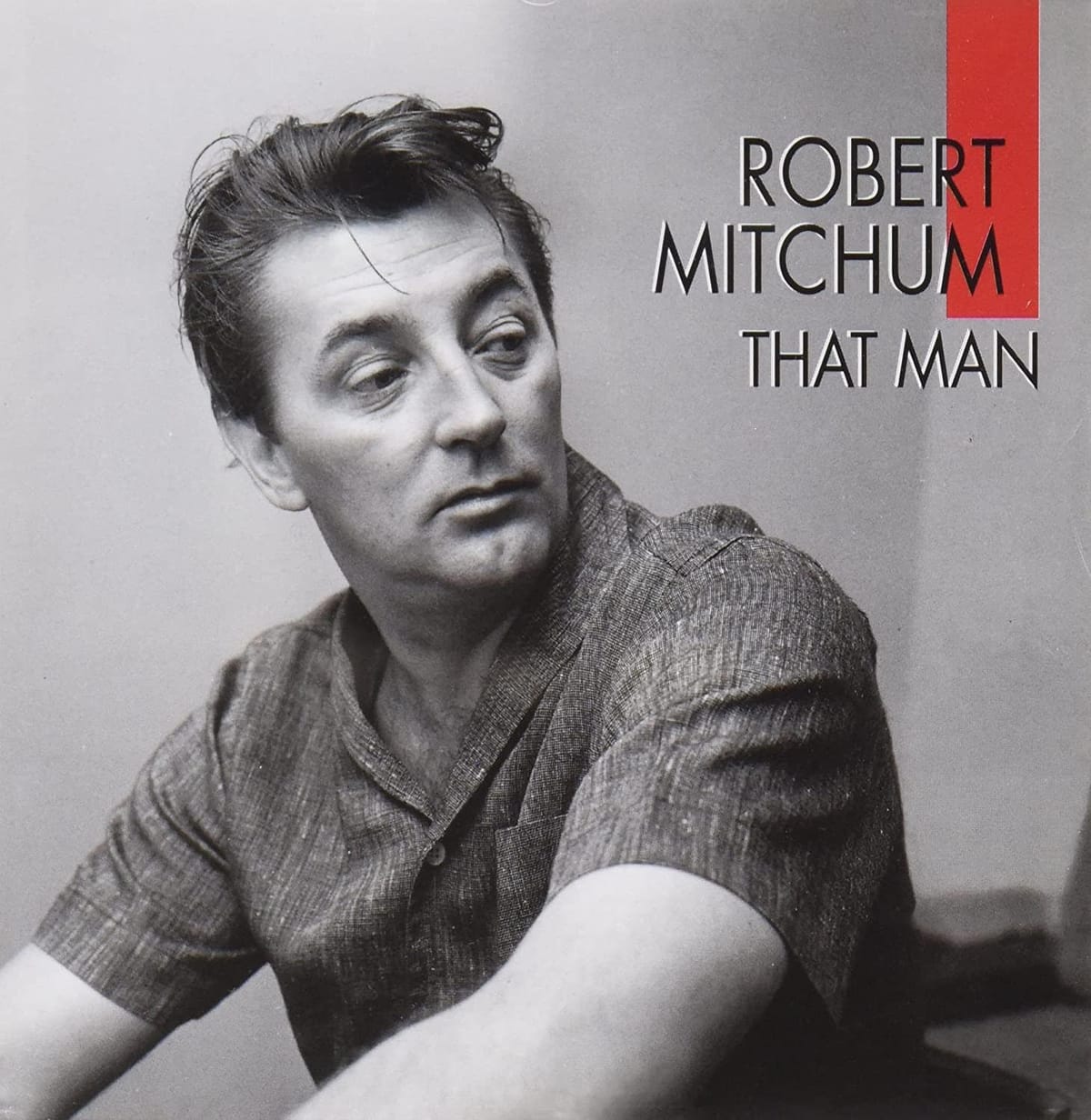
Another 10 years went by, and the music bug struck him again. This time he stuck to a genre better suited to his tough-guy image: country. That Man Robert Mitchum... Sings was released in 1967 and was described by his biographer, Lee Server, as "a hybrid of Dean Martin and Keith Richards." It featured old classics such as "Little Old Wine Drinker Me" and "Sunny" plus a few original recordings, and made it to number 35 in the country charts.
It was certainly a brave decision on Mitchum's part to put himself out there with these two wildly different albums. Most movie stars stuck to their type, unwilling to move too far away from their perceived persona for fear of permanently damaging their carefully curated brands. But not Mitchum. He couldn't give a fuck.
"A hybrid of Dean Martin and Keith Richards. — Lee Server, on That Man Robert Mitchum... Sings
Live Like Mitchum: A Caribbean Pilgrimage
If the Calypso album puts you in the mood for a Caribbean adventure (and it will), head to Trinidad and Tobago. Mitchum filmed two movies back-to-back in the islands: Fire Down Below (with Lemmon and Hayworth) and Heaven Knows, Mr. Allison (with Deborah Kerr, directed by John Huston). During Heaven Knows, Mr. Allison, the cast and crew stayed at the Blue Haven Hotel on Bacolet Bay in Tobago, a clifftop property that had opened in the 1940s and quickly became a favourite of visiting Hollywood royalty. Rita Hayworth also stayed here. The hotel later fell into disrepair and was closed for 25 years before being lovingly restored by its Austrian owners and reopened in 2000. It is now a 55-room boutique hotel, regularly named Tobago's Leading Hotel at the World Travel Awards, with ocean-view rooms, a pool, and a palm-lined beach. An original cannon from the old Fort King George fortifications is still a feature of the property. Rooms from around $150 per night.
Meanwhile, Mitchum spent his evenings in the bars and music clubs of Trinidad, soaking up the calypso scene that would inspire the album. Lee Server's biography describes him snapping up every record he could find and hanging out at live shows until the small hours.
Trinidad's calypso culture is still thriving. The island's annual Carnival (February or March) is one of the greatest street parties on earth, with calypso and soca music at its heart. If you can't make Carnival, the live music scene in Port of Spain runs year-round: venues along Ariapita Avenue in Woodbrook are good places to start. For a more authentic, Mitchum-style experience, seek out a local rum bar playing live calypso and order a rum punch. You won't need to fake the accent.
And if you really want to do it properly, put the Calypso - Is Like So... album on your phone, order a rum and coconut water, and raise a glass to the only Hollywood tough guy who ever had the audacity to release a Caribbean folk album. It shouldn't work. It absolutely does.