 Photo: Spike, CC BY-SA 4.0, via Wikimedia Commons
 CANNES
La Croisette
1955
MONACO
Monte-Carlo
1956
CAP D'ANTIBES
Eden-Roc
1914
NICE
Cours Saleya
Côte d'Azur
The French Riviera
Hollywood's Summer Playground
The stretch of Mediterranean coast between Cannes and the Italian border has been a magnet for Hollywood since the 1920s. When the Grand Hôtel du Cap opened at Cap d'Antibes in 1914, it was the American expatriates Gerald and Sara Murphy who made it fashionable, renting the entire hotel for a summer and bringing half of the Lost Generation with them. F. Scott Fitzgerald set Tender Is the Night here.
By the 1950s the Riviera belonged to the movies: Grace Kelly met her prince at the Cannes Film Festival, Elizabeth Taylor and Richard Burton anchored their yacht off the rocks, and Alfred Hitchcock turned the whole coastline into a ninety-minute love letter called To Catch a Thief. This is the Côte d'Azur as the stars knew it, and, remarkably, much of it is still there to visit.
In the Footsteps of To Catch a Thief
To Catch a Thief (1955), directed by Alfred Hitchcock, is essentially a love letter to the Côte d'Azur, with Cary Grant as a retired cat burglar and Grace Kelly as the American heiress determined to catch him. It was shot almost entirely on location, and the locations are almost entirely still visitable.
The hair-raising driving scene, in which Kelly terrifies Grant on the winding cliff roads, was filmed on the Grande Corniche, the high road between Nice and Monaco that passes through the medieval villages of La Turbie and Èze. Kelly, not a confident driver, did her own driving for the scene — a detail that has haunted the film ever since, as she died in 1982 from injuries suffered in a car crash on a similar Riviera road.
The picnic scene, one of the most romantic in Hitchcock's career, was filmed at a viewpoint in Beausoleil overlooking Monaco. The flower market where Grant meets the insurance man is the Cours Saleya in Nice's Old Town, still trading daily except Mondays. Grant's hilltop villa was near Saint-Jeannet, a perched village above Nice, and the harbour scenes were shot in Monte Carlo.
"Grace Kelly met Prince Rainier III during the 1955 Cannes Film Festival. She married him the following year and never made another film.
Cannes & the Croisette
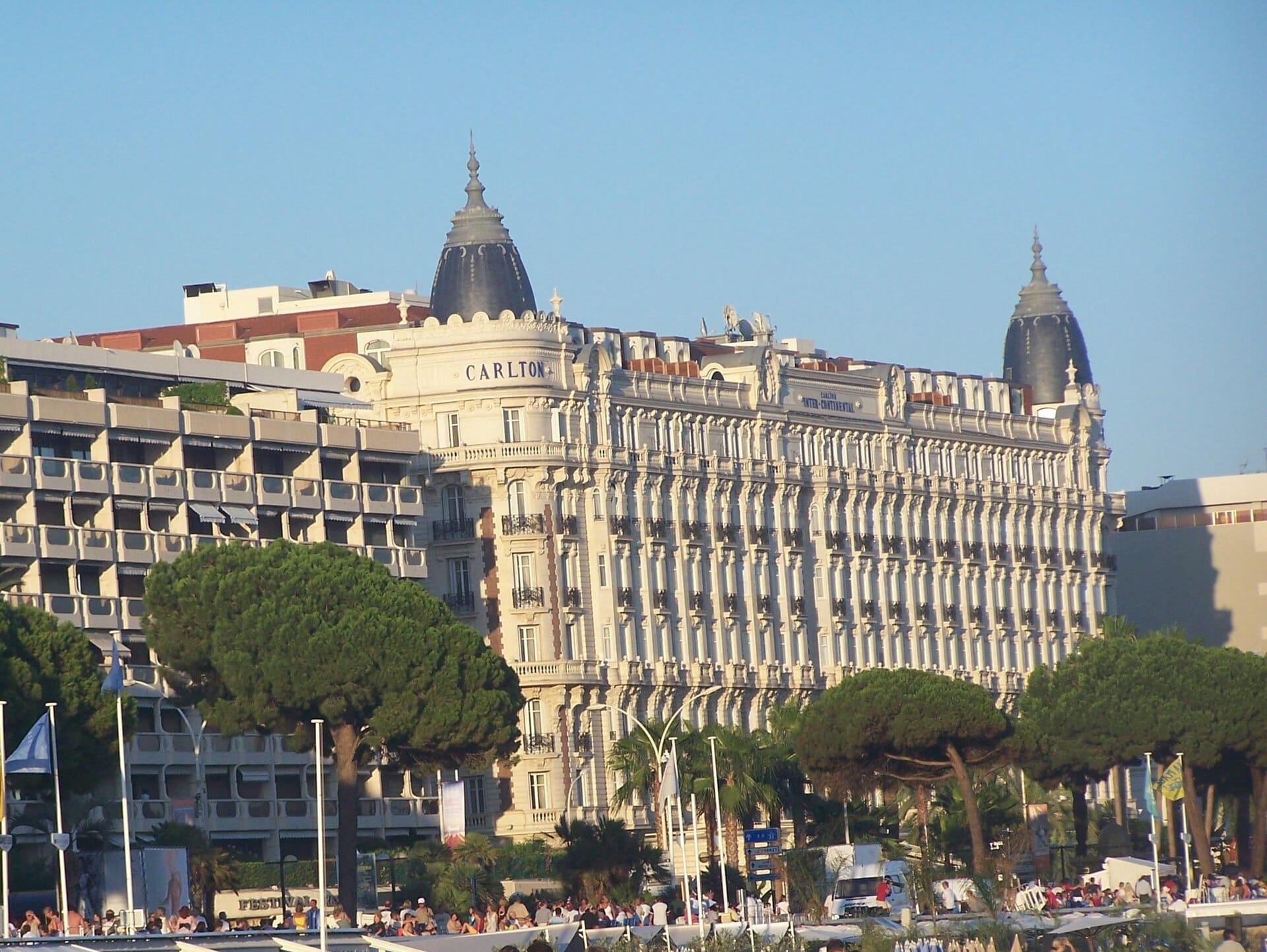
The belle époque palace dominating La Croisette — the InterContinental Carlton, now reborn as Carlton Cannes, a Regent Hotel after a major renovation — is the centrepiece of To Catch a Thief. Grace Kelly's character stays here, and Grant's John Robie arrives at the hotel's private beach after escaping by boat.
It has been the unofficial headquarters of the Cannes Film Festival since the festival began in 1946. During festival season every May it becomes the most glamorous office building in the world, every suite occupied by a studio executive, a producer, or someone pretending to be one. Rooms from around €500 per night, considerably more during the festival. 58 La Croisette, Cannes.
Cap d'Antibes
A wooded headland between Cannes and Nice holds the most mythologised hotel on the Riviera: the Hôtel du Cap-Eden-Roc, with a saltwater pool chiselled straight out of the clifftop rock. The pool's origins are more romantic than you would expect — when the Grand Hôtel du Cap opened in 1914, the First World War turned it into a convalescence centre for the American Red Cross, and it was the nurses, seeking relief from the heat, who inspired carving a bathing pool into the rock below.
A galaxy of stars followed: Chaplin, Fred Astaire, Marlene Dietrich, Cary Grant, Sinatra, the Kennedys, Taylor and Burton. F. Scott Fitzgerald based the hotel in Tender Is the Night on this place. The Eden-Roc remains the address of choice for stars attending Cannes, and every May it hosts the amfAR gala, one of the most star-studded evenings on the coast. It famously did not accept credit cards until 2006, nor install televisions until 2012 — cash or bank transfer only, even now. Rooms from around €700 per night; seasonal, April to October. Boulevard J.F. Kennedy, Cap d'Antibes.
Monaco & Monte-Carlo
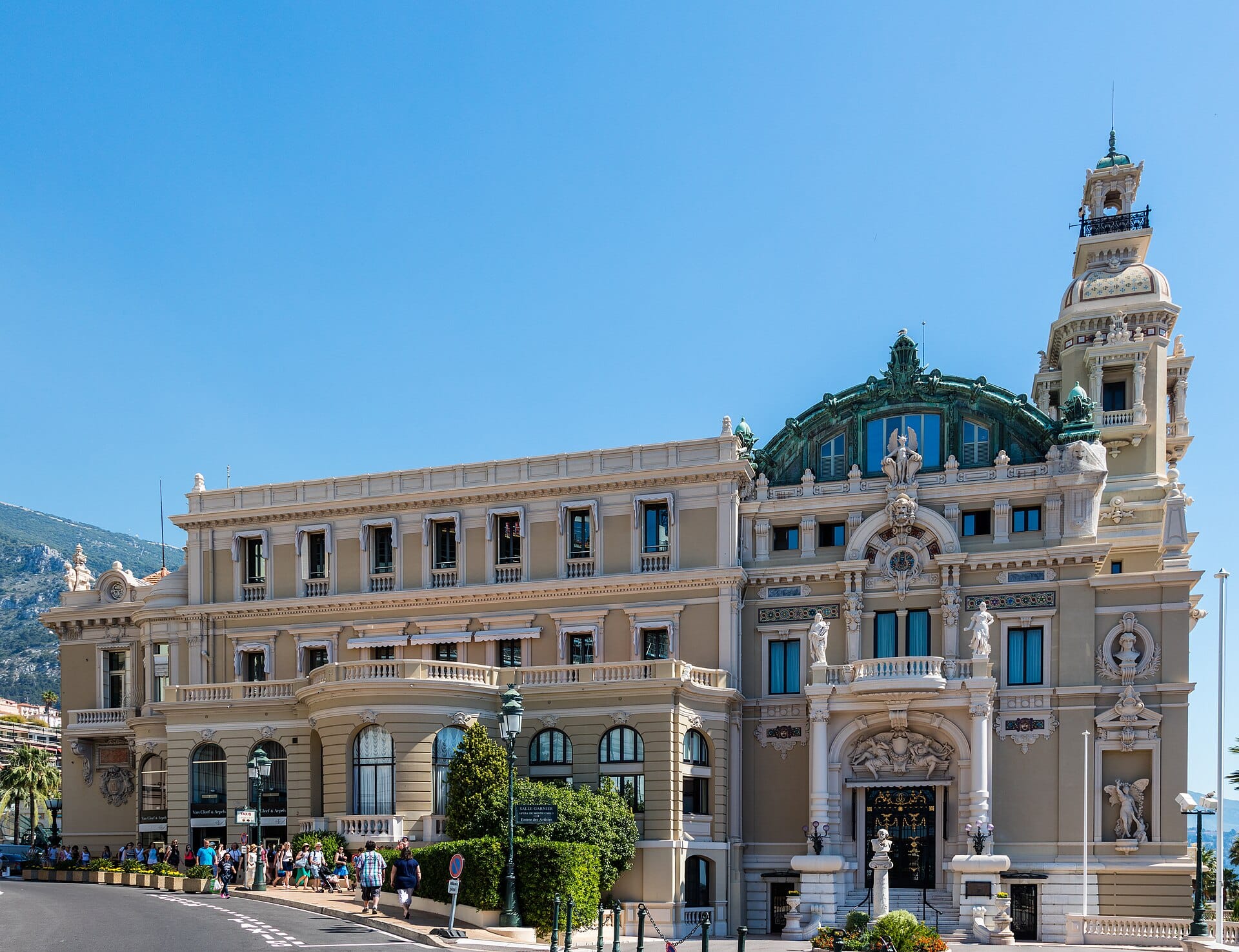
The Casino de Monte-Carlo is the belle époque masterpiece that features in To Catch a Thief, where Grant and Kelly attend the gambling scenes filmed inside its gilded halls. Kelly herself would later live just up the hill as Princess Grace after her 1956 marriage to Prince Rainier III. The adjoining Hôtel de Paris has been the default address for visiting royalty, billionaires and film stars since the 1860s. Rooms from around €500 per night; casino entry around €17, with a jacket required for the private gaming rooms.
Monaco's Hollywood connections run deep. In 1958, Grace Kelly invited Frank Sinatra to perform at a United Nations Refugee Fund gala at the Sporting Club; he was introduced by Noël Coward and played with the Quincy Jones Orchestra in front of Cary Grant, Natalie Wood and Douglas Fairbanks Jr. Sinatra returned most years for Kelly's Red Cross Ball, staying at the Hôtel de Paris and dining with her at The Pirate, a theatrical beachside restaurant at Saint-Jean-Cap-Ferrat where shirtless waiters cooked over open grills and guests were encouraged to smash their plates.
Nice & the Corniches
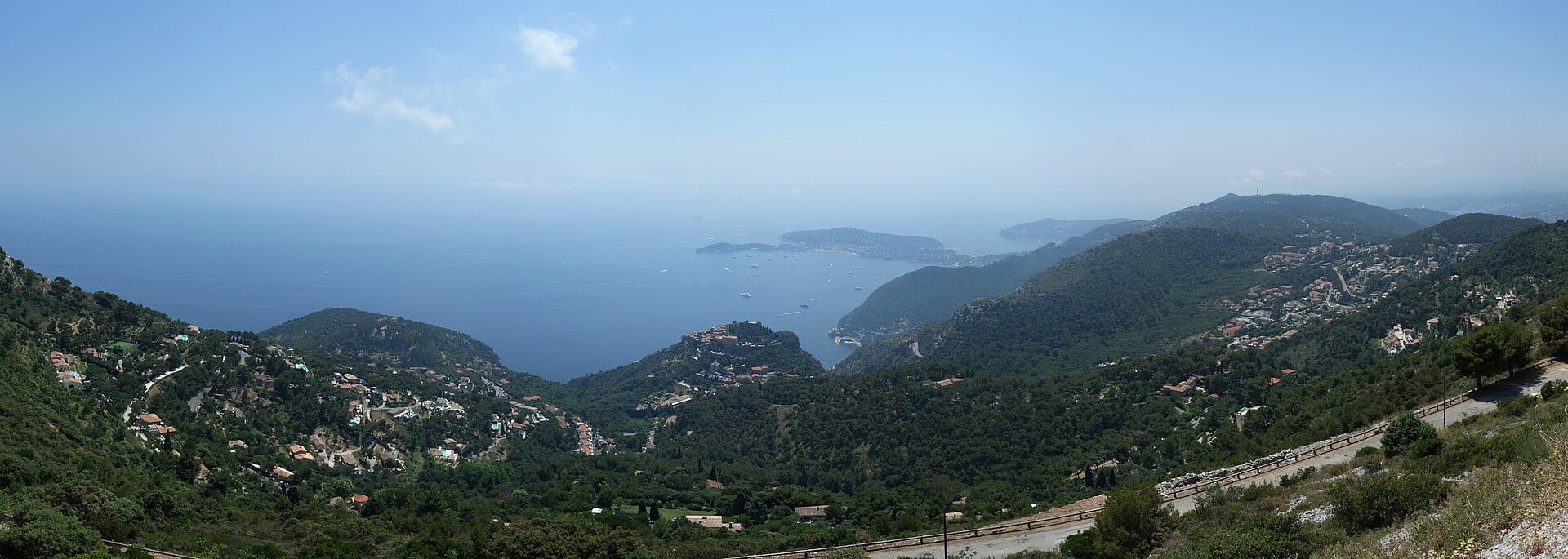
Nice is the Riviera's grand old capital, and its Old Town flower market — the Cours Saleya, where Hitchcock filmed Grant meeting the man from Lloyd's — still trades every morning but Monday. Above the city run the three Corniche roads to Monaco, immortalised by that white-knuckle drive in To Catch a Thief. The Grande Corniche, the highest, threads through La Turbie and the eagle's-nest village of Èze, whose views over the coast (pictured at the top of this page) are among the most spectacular in France.
These perched medieval villages — Èze, Saint-Jeannet, Cagnes-sur-Mer — are an easy drive from Nice or Monaco and make the cinematic Riviera feel close enough to touch.
Saint-Tropez
Further west, the fishing village of Saint-Tropez was transformed into a jet-set legend almost single-handedly by Brigitte Bardot, whose 1956 film And God Created Woman made both the actress and the town international sensations. Bardot made Saint-Tropez her home, and the village has traded on that sun-drenched, barefoot glamour ever since.